Cinematography is the key term to describe camerawork: framing, angle and camera movement.
You need to be able to accurately identify camera shots, angles and movement - and most importantly the effect it has on the audience.
This video from Darius Britt will help you if you're not sure on any of the shots:
Cinematography: Practical task
Create a one minute cinematography video that illustrates the main types of camera shot, angle and movement that we learned in the lesson on cinematography.
Complete the following:
1) Get into pairs or work individually. Note: although the planning and filming can be done collectively, all students MUST edit their own video.
2) Plan out the different shots, angles and examples of camera movement you need to include.
3) Film everything you need - as creatively as possible. You can use comedy, narrative or just keep it simple. However, you MUST make sure the framing and media terminology is accurate.
4) Edit your video to approximately one minute, adding music, voiceover, titles, effects and anything else that will make your film visually effective and entertaining for an audience. You can edit in school using Premiere Pro but are welcome to edit at home if you have the software to do it.
5) Export your finished video, upload it to YouTube and post it to your blog along with a 100-word explanation of your work.
Here's an example from last year to give you an idea of what we're after (note - this goes a little beyond the brief!)
And here's an example from a similar task (camerawork and editing) that a student at Lingfield College created:
Deadline: Wednesday 6 November
Monday, October 28, 2019

Wednesday, October 16, 2019
Film & TV Language: Sound video feedback and learner response
This is always a great lesson - screening your parallel and contrapuntal sound videos.
When they are done, you'll need to complete the following tasks on your blog:
5) Finally, what have you learned about the importance of sound to film and TV through this week's work?
Complete this for homework if you don't get it done in the lesson - due date specified by your coursework teacher. Don't forget the additional blog tasks for Sound too!
When they are done, you'll need to complete the following tasks on your blog:
Video feedback/learner response
Create a new blogpost called 'Sound video feedback and learner response'. Make sure your video is on YouTube and embedded on your blog and then complete the following tasks:
1) Type up your feedback from your teacher.
2) Type up your feedback from fellow students.
3) Now reflect on your work and write your own comments. Add three WWWs and three EBIs underneath the rest of your feedback.
4) Learner response: compare your own video against your evaluation of the top three videos in the class. Whose did you think was best and why? How could you have improved your own video?
5) Finally, what have you learned about the importance of sound to film and TV through this week's work?
Complete this for homework if you don't get it done in the lesson - due date specified by your coursework teacher. Don't forget the additional blog tasks for Sound too!
MIGRAIN: index and folder check
We are approaching the halfway point in our MIGRAIN Introduction to Media unit and need to create an index to ensure we are up-to-date on all work so far.
As you will have seen with your recent assessment, it is important we are revising terminology and theory on an ongoing basis and making sure there are no gaps as the course continues.
Keeping an index of all your work is extremely good practice from a revision perspective. Not only does this keep the concepts and media terminology fresh in your mind but it will also highlight if you've missed anything through absence or trips. Your index should currently include the following:
1) Introduction to Media: 10 questions
2) Media consumption audit
3) Semiotics blog tasks - English analysis and Icon, Index, Symbol
4) Language: Reading an image - advert analyses
5) Reception theory - advert analyses part 2
6) Genre: Factsheets and genre study questions
7) Blog feedback and learner response
8) Narrative: Factsheet questions
For your index, the text should link to YOUR corresponding blogpost so you can access your work on each key concept quickly and easily. This also means you if you have missed anything you can now catch up with the work/notes and won't underperform in assessments or exams due to gaps in your knowledge.
Important: your index needs to be completed during the lesson and anything missing completed over half-term without fail.
Folder check
An organised folder is absolutely vital when it comes to keeping notes for revision in future. At the beginning of the year you started an A4 ringbinder folder with dividers - now we need to check we have all our notes in chronological order and a space for our marked assessment when it is returned after half-term.
We will be carrying out folder checks in the week after half-term so make sure you have the following with you for Media lessons after the break:
As you will have seen with your recent assessment, it is important we are revising terminology and theory on an ongoing basis and making sure there are no gaps as the course continues.
MIGRAIN index - Media Exam blog
Keeping an index of all your work is extremely good practice from a revision perspective. Not only does this keep the concepts and media terminology fresh in your mind but it will also highlight if you've missed anything through absence or trips. Your index should currently include the following:
1) Introduction to Media: 10 questions
2) Media consumption audit
3) Semiotics blog tasks - English analysis and Icon, Index, Symbol
4) Language: Reading an image - advert analyses
5) Reception theory - advert analyses part 2
6) Genre: Factsheets and genre study questions
7) Blog feedback and learner response
8) Narrative: Factsheet questions
For your index, the text should link to YOUR corresponding blogpost so you can access your work on each key concept quickly and easily. This also means you if you have missed anything you can now catch up with the work/notes and won't underperform in assessments or exams due to gaps in your knowledge.
Important: your index needs to be completed during the lesson and anything missing completed over half-term without fail.
Folder check
An organised folder is absolutely vital when it comes to keeping notes for revision in future. At the beginning of the year you started an A4 ringbinder folder with dividers - now we need to check we have all our notes in chronological order and a space for our marked assessment when it is returned after half-term.
We will be carrying out folder checks in the week after half-term so make sure you have the following with you for Media lessons after the break:
- A4 ringbinder folder or equivalent
- Dividers for your exam teacher / coursework teacher etc.
- Notes/Film & TV Language pack for all lessons so far
- Space for your marked assessment
Wednesday, October 09, 2019
Blog feedback and learner response
You will be receiving blog feedback from your exam teacher via email this week.
This is a good opportunity to reflect on the work you've done so far in A Level Media Studies and identify the areas you want to improve over the next few weeks and months.
Whenever you receive blog feedback over email you must do the following:
Open up your email in Outlook and read your feedback carefully
1) Copy and paste your feedback and LR into a NEW blogpost on your Exam blog called 'Blog feedback and Learner Response'.
2) Below the feedback, complete the learner response tasks or questions and then publish the blogpost.
3) Reply to the original email from your teacher confirming you have completed the learner response and provide a link to your learner response blogpost. If your LR was to complete any missing work, ensure this is complete and then email your teacher to confirm.
LR due date: next exam lesson
Reminder: A Level Media assessment
You have your first A Level Media assessment in your exam side double lesson in the week before half-term. Revise everything you've learned in Media this half-term on both sides of the course - the more media terminology you use in the assessment, the better you'll do!
Good luck!
Film & TV Language: Sound
Our next aspect of film language is crucial: Sound.
A reminder of our notes on Sound:
Sound is incredibly important to our understanding of a film. The music, dialogue and sound effects (SFX) all contribute to the way we appreciate what we are watching on the screen.
Complete this video task in pairs - you only need to create ONE video between the two of you but it must be uploaded to YouTube and posted to BOTH of your blogs.
1) Watch any of the sound clips in the Film Language booklet that we didn't get to in class and write answers to the questions to go with each clip on your blog. E.g. A Clockwork Orange, Life On Mars, Once Upon A Time In The West, Once Upon A Time In America. The clips are all available on the Media Shared drive M: > Resources > A Level > Film Language.
2) Find a film clip on YouTube that uses sound in an interesting way. Analyse the use of sound, making sure you use the key language we have learned about sound in film:
A reminder of our notes on Sound:
Sound is incredibly important to our understanding of a film. The music, dialogue and sound effects (SFX) all contribute to the way we appreciate what we are watching on the screen.
Diegetic and non-diegetic sound
Diegetic sound comes from the world of the film we are watching. This could include dialogue by characters in the scene or music or other sound that comes from a source we would naturally expect that sound to come from, e.g. a radio or TV.
Non-diegetic sound is added during post production, e.g. voice over or music sound track.
Parallel and contrapuntal sound
Parallel sound is music we would normally expect to hear accompanying a scene, e.g. soft romantic music might be played over a love scene.
Contrapuntal sound is music that we don’t normally associate with the scene we are watching, e.g. classical music played over a bloody fight scene.
Sound bridge
Sometimes you will notice that sound from a scene continues even though the visual image has moved to the next scene. Alternatively, the sound of the following scene may begin before the image changes. This is a called a sound bridge and helps create a smooth transition from one scene to the next.
Homework: parallel and contrapuntal sound video
Complete this video task in pairs - you only need to create ONE video between the two of you but it must be uploaded to YouTube and posted to BOTH of your blogs.
1) Choose a 60 second piece of music - ideally from YouTube and not something that is likely to be blocked on copyright grounds.
2) Using editing software (Windows Moviemaker is fine but Adobe Premiere is available on Media PCs) produce a one-minute montage of images and video. Half the images need to be parallel to the music and half need to be contrapuntal. Think carefully about how you can best select images and video to have a significant impact on the audience.
3) Upload the finished video to YouTube and embed it in your own blog with a brief description of what you've created. Note: due to videos being blocked on copyright grounds, please also save the exported video file (e.g. MP4) into your student folder on the M: Media Shared drive.
4) Present your video to the class next lesson, explaining the thinking behind your work.
Deadline: next Wednesday
Here's an example from a previous year to give you an idea of what to produce:
Sound analysis: blog tasks
Deadline: next Wednesday
Here's an example from a previous year to give you an idea of what to produce:
Sound analysis: blog tasks
1) Watch any of the sound clips in the Film Language booklet that we didn't get to in class and write answers to the questions to go with each clip on your blog. E.g. A Clockwork Orange, Life On Mars, Once Upon A Time In The West, Once Upon A Time In America. The clips are all available on the Media Shared drive M: > Resources > A Level > Film Language.
2) Find a film clip on YouTube that uses sound in an interesting way. Analyse the use of sound, making sure you use the key language we have learned about sound in film:
- Diegetic and non-diegetic sound
- Parallel and contrapuntal sound
- Sound bridges
Remember to discuss/analyse all the different types of sound present in the clip:
- Music
- Dialogue
- Voiceover
- Sound effects
You also need to highlight or put in bold any use of media language.
Complete for homework - due date confirmed by your Film Language teacher.
Monday, October 07, 2019
October update: Textbooks and more
It's been an action-packed start to the year in Media and now is a good time to take stock and go through some key messages and updates.
Media Awards
We've had a few questions about the Media Awards as it used to be in October. However, due to the timing of the coursework for the new specifications, it's now in March. We’ll have more information about the Media Awards nearer the time!
Twitter
Don’t forget the Greenford Media department runs a Twitter account that tweets and retweets useful articles, links and questions that A Level Media students should be keeping up with. You don’t need to join Twitter or tweet yourself but follow us @blogmacguffin or simply visit twitter.com/blogmacguffin to look at the account from any web browser.
We'll be talking about CMN in more detail in the next couple of weeks and in Post-16 assemblies so look out for more here!
Media Awards
We've had a few questions about the Media Awards as it used to be in October. However, due to the timing of the coursework for the new specifications, it's now in March. We’ll have more information about the Media Awards nearer the time!
Don’t forget the Greenford Media department runs a Twitter account that tweets and retweets useful articles, links and questions that A Level Media students should be keeping up with. You don’t need to join Twitter or tweet yourself but follow us @blogmacguffin or simply visit twitter.com/blogmacguffin to look at the account from any web browser.
A Level Media Textbooks
There are now textbooks and revision guides available for the new specification AQA A Level Media Studies course. We would strongly recommend you buy as many textbooks you can as collectively they cover the whole course in terms of subject content and also feature many of the CSPs that will come up in the exams.
Important note: if you're eligible for the bursary (or even think you might be eligible) then the school may well buy these books for you! Speak to Mr Halsey to find out more.
The details:
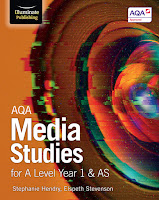
AQA MEDIA STUDIES FOR A LEVEL YR 1 & AS: STUDENT BOOK
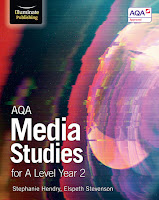
AQA MEDIA STUDIES FOR A LEVEL YEAR 2: STUDENT BOOK
 AQA MEDIA STUDIES FOR A LEVEL YEAR 1 & AS REVISION GUIDE
Creative Mentor Network
The Creative Mentor Network is an incredible opportunity for post-16 students to make connections in the creative and media industries by shadowing a professional for several weeks. We’ve had a number of students complete the project and develop a fantastic range of contacts and experiences that will help them to get a job in the creative industries in future.
You can find more details on the CMN website or watch the video below (featuring our very own Hussein!)
There are now textbooks and revision guides available for the new specification AQA A Level Media Studies course. We would strongly recommend you buy as many textbooks you can as collectively they cover the whole course in terms of subject content and also feature many of the CSPs that will come up in the exams.
Important note: if you're eligible for the bursary (or even think you might be eligible) then the school may well buy these books for you! Speak to Mr Halsey to find out more.
The details:

AQA MEDIA STUDIES FOR A LEVEL YR 1 & AS: STUDENT BOOK
- NEW SPEC: AQA Media Studies for A Level Yr 1 & AS: Student Book
- AUTHOR(S): Stephanie Hendry, Elspeth Stevenson
- AWARDING BODY: AQA
- LEVEL: A Level Year 1 & AS
- ISBN: 978-1-911208-03-7
- SUBJECT: Media Studies
- PAGES: 272pp

AQA MEDIA STUDIES FOR A LEVEL YEAR 2: STUDENT BOOK
- AQA Media Studies for A Level Year 2: Student Book
- AUTHOR(S): Stephanie Hendry, Elspeth Stevenson
- AWARDING BODY: AQA
- LEVEL: A Level Year 2
- ISBN: 978-1-911208-09-9
- SUBJECT: Media Studies

- AQA Media Studies for A Level Year 1 & AS: Revision Guide
- AUTHOR(S): Stephanie Hendry
- AWARDING BODY: AQA
- LEVEL: A Level Year 1 & AS
- ISBN: 978-1-911208-86-0
- SUBJECT: Media Studies
Creative Mentor Network
The Creative Mentor Network is an incredible opportunity for post-16 students to make connections in the creative and media industries by shadowing a professional for several weeks. We’ve had a number of students complete the project and develop a fantastic range of contacts and experiences that will help them to get a job in the creative industries in future.
You can find more details on the CMN website or watch the video below (featuring our very own Hussein!)
We'll be talking about CMN in more detail in the next couple of weeks and in Post-16 assemblies so look out for more here!
MIGRAIN: Narrative
Narrative is a vital concept for A Level Media Studies and underpins the success or failure of most media texts.
We look for narratives - stories - to make sense of media products. Everything from film and television to news and adverts relies on narrative to help audiences understand the message.
There are narrative patterns and three key narrative theories we need to learn as part of our introduction to A Level Media. The notes as a reminder:
Narrative patterns
Linear Pattern: progresses forward towards a resolution - Beginning, Middle and End.
Multi-strand Narrative: popular in broadcast TV (e.g. soaps) and film. Involves more than one narrative running parallel involving different characters and locations.
Documentary narrative: this may revolve round a central theme (e.g. troublesome neighbours) or group of people.
Long-running TV series such as Game of Thrones or Breaking Bad have one major overarching narrative and lots of mini-narratives. The overarching narrative runs over the series, the mini narrative may be resolved within an episode.
Narrative theories
When studying narrative in Media, we need to be able to identify what the story is and how it is being told. There are three key theories we need to learn and apply:
Enigma and Action Codes - Roland Barthes
Barthes suggested that stories have certain codes that audiences understand and respond to.
ENIGMA codes: control how much we know and help hold our interest. It creates mystery during the narrative.
ACTION codes: events or actions in the story that are important in developing the narrative, e.g. a gun being cocked signifies that a violent scene will follow.
Todorov: equilibrium
Tzvetan Todorov proposed a theory of equilibrium:
Equilibrium: An existing state of harmony
Disequilibrium: Equilibrium is disrupted by an unfortunate event or evil character which leads to a chain of events involving conflict
New Equilibrium: The evil forces are defeated, the conflict is resolved and harmony exists once more
Character theory: Propp
Vladimir Propp came up with a list of stock characters in narratives by examining Russian fairytales. He called them the seven spheres of action:
The Villain: Creates a complication in the narrative
The Donor: Gives the hero something that will help in the resolution
The Helper: Helps the hero in restoring the resolution
The Princess: Has to be saved by the hero
The Dispatcher: Sends the hero on a task
The Hero: Central protagonist, saves the day and restores equilibrium
The False Hero: Rare character that appears to be good but is revealed to have been bad all along.
Narrative: blog task
Complete the following questions using the Media Factsheet resource available on the Media Shared drive.
You'll find them in our Media Factsheet archive: M:\Resources\A Level\Media Factsheets
Read Media Factsheet 14 - Telling Stories: The Media's Use of Narrative and answer the following questions:
1) Give an example from film or television that uses Todorov's narrative structure of equilibrium, disequilibrium and new equilibrium.
2) Complete the activity on page 1 of the Factsheet: find a clip on YouTube of the opening of a new TV drama series (season 1, episode 1). Embed the clip in your blog and write an analysis of the narrative markers that help establish setting, character and plot.
3) Provide three different examples from film or television of characters that fit Propp's hero character role.
4) Give an example of a binary opposition.
5) What example is provided in the Factsheet for the way narratives can emphasise dominant ideologies and values?
6) Why do enigma and action codes (Barthes) offer gratifications for audiences?
7) Write a one-sentence summary of the four different types of TV narrative:
You will be given lesson time to work on this but will need to complete for homework - due date specified by your exam class teacher.
You'll find them in our Media Factsheet archive: M:\Resources\A Level\Media Factsheets
Read Media Factsheet 14 - Telling Stories: The Media's Use of Narrative and answer the following questions:
1) Give an example from film or television that uses Todorov's narrative structure of equilibrium, disequilibrium and new equilibrium.
2) Complete the activity on page 1 of the Factsheet: find a clip on YouTube of the opening of a new TV drama series (season 1, episode 1). Embed the clip in your blog and write an analysis of the narrative markers that help establish setting, character and plot.
3) Provide three different examples from film or television of characters that fit Propp's hero character role.
4) Give an example of a binary opposition.
5) What example is provided in the Factsheet for the way narratives can emphasise dominant ideologies and values?
6) Why do enigma and action codes (Barthes) offer gratifications for audiences?
7) Write a one-sentence summary of the four different types of TV narrative:
- Episodic narrative (the series)
- Overarching narrative (the serial)
- Mixed narrative
- Multi-strand overlapping narrative (soap narrative)
You will be given lesson time to work on this but will need to complete for homework - due date specified by your exam class teacher.
Subscribe to:
Posts (Atom)