Monday, November 13, 2023

MIGRAIN: Audience theory 2 - the effects debate

Forming opinions on the effect the media has on audiences is a crucial aspect of A Level Media Studies.

There are a range of theories we need to learn to help develop our understanding and opinions of this topic.

Audience theory 2: notes

Bandura: Social learning theory
Albert Bandura’s social learning theory came from an influential psychology study involving a bobo doll and children’s behaviour after observing violent acts. 

Social learning theory suggests people learn from one another, via observation, imitation, and modeling.


Stanley Cohen: moral panic
Moral Panic occurs when someone or something is defined by the media as a threat to society. The term was created by Stanley Cohen.

Cohen suggested in his 1972 book ‘Folk Devils and Moral Panics’ that a moral panic occurs when a “condition, episode, person or group of people emerges to become defined as a threat to societal values and interests”.

Cohen suggested the media plays an important role in creating moral panic, even if just through news reports.

Cohen defined his five stages of moral panic as:

1) Something or someone is defined as a threat to values or interests
2) This threat is depicted in an easily recognisable form by the media
3) There is a rapid build-up of public concern
4) There is a response from authorities or opinion makers
5) The panic recedes or results in social changes


Technopanic: the modern moral panic
A technopanic is simply a moral panic that focuses on something linked to new technology.


George Gerbner: Cultivation theory
George Gerbner researched whether watching television influences the audience's ideas and perception of everyday life. 

Cultivation theories suggest that TV viewing can have long-term, gradual but significant effects on the audience’s attitudes and beliefs (rather than behaviour).

Gerbner’s Cultivation theory states that high frequency viewers of television are more susceptible to media messages and the belief that they are real and valid.

Heavy viewers are exposed to more violence and therefore are affected by the Mean World Syndrome, the belief that the world is a far worse and dangerous place than it actually is.

Source: Mass Communication theory

Audience theory 2: blog tasks

Create a new blogpost called 'Audience theory 2 - blog tasks' and work through the following tasks:

Theory questions and your opinion

1) Social learning theory has been criticised for simplifying the causes of violence in society. Do you think the media is responsible for anti-social behaviour and violence?

2) How is social learning theory relevant in the digital age? Are young people now learning behaviour from social media and the internet? Give examples.

3) Research three examples of moral panic from the last 50 years. To what extent was the media responsible for these moral panics? Was the concern in society justified? How have things changed as a result of these moral panics?

4) Read this introduction to an academic paper on technopanics. What examples are given of technopanics that create fear in society? If the link is blocked in school, you can access the text here.

5) Do you think the internet should be regulated? Should the government try and control what we can access online?

6) Apply Gerbner's cultivation theory to new and digital media. Is the internet creating a fearful population? Are we becoming desensitised to online threats, trolling and abuse? Is heavy internet use something we should be worried about in society? Write a paragraph discussing these ideas.


The effects debate: Media Factsheet

Complete the following tasks using Media Factsheet 030 - The Effects Debate available on the Media Shared drive. You'll find it in our Media Factsheet archive: M:\Resources\A Level\Media Factsheets. You can also access it via your school Google login here.

Read Media Factsheet 030 - Media and Audiences -The Effects Debate and answer the following questions:

1) Complete the questions in the first activity box (beginning with 'Do you play violent games? Are you violent in real life?')

2) What are the four categories for different effects theories?

3) What are the examples provided for the hypodermic needle theory - where media texts have been blamed for certain events? 

4) What was the 1999 Columbine massacre? You may need to research this online in addition to the information on the factsheet.

5) What are the reasons listed on the factsheet to possibly explain the Columbine High School massacre?

6) How does the factsheet describe Gerbner's Cultivation theory?

7) What does the factsheet suggest about action films and the values and ideologies that are reinforced with regards to violence?

8) What criticisms of direct effect theories are suggested in the factsheet?

9) Why might the 1970s sitcom Love Thy Neighbour be considered so controversial today? What does this tell us about Reception theory and how audiences create meanings?

10) What examples are provided for Hall's theory of preferred, negotiated and oppositional readings?

Finish for homework if you don't complete it in the lesson: due date on Google Classroom.

Wednesday, November 08, 2023

Into Film Festival - trip letters and briefing sheets

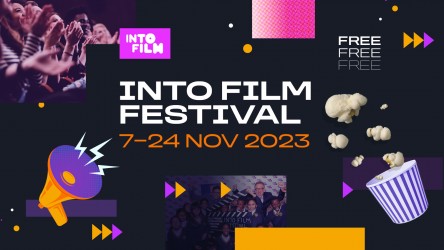
The Into Film Festival is a fantastic opportunity to see films and hear talks from people in the film industry. 

For our two Into Film Festival trips, you can find all the paperwork below. You'll need to log in to your Greenford Google account to access.

Oppenheimer screening

BFI screening and exhibition

We hope you enjoy the trips!

Film & TV Language: Cinematography blog tasks

We have watched some superb film and TV clips for cinematography, learning the importance of camera shots, angle and movement.

Being able to confidently analyse camera shots and movement is essential for media textual analysis and may well be required in your media exams.

Here's another good YouTube video on camerawork and the effect on audiences:


You may also want to check out the Studio Binder YouTube channel which has extended videos on all aspects of the video production process. Here's their ultimate guide to camera shots for example:


Cinematography: blog analysis tasks

Your cinematography blog tasks are as follows:

Find the opening sequence to a film or TV drama of your choice on YouTube and embed the video in a blogpost called 'Cinematography blog tasks'. 

1) Write an analysis of the cinematography in the opening sequence. Highlight your use of media language and try to cover camera shots, angles and movement using the terminology we have learned in lessons. 

2) How does the camerawork give the audience clues about the setting, narrative and character?

Secondly, find and analyse one film or TV still image. Add the image to your blogpost. 

3) Analyse the camera shot/angle in the image and what it communicates to the audience. Remember to highlight the media terminology you use.

Due date: see Google Classroom

Film & TV Language: index so far

We are half-way through our Film & TV Language unit and need to create an index to ensure we are up-to-date on all work so far.

Film & TV Language index
Keeping an index of all your work is extremely good practice from a revision perspective. Not only does this keep the concepts and media terminology fresh in your mind but it will also highlight if you've missed anything through absence. Your index should currently include the following:

1) Film poster analysis
2) Mise-en-scene analysis blog tasks
3) Mise-en-scene video recreation and learner response
4) Lighting analysis blog tasks
5) Sound analysis blog tasks

For your index, it needs to link to YOUR corresponding blogpost so you can access your work on each key concept quickly and easily. This also means you if you have missed anything you can now catch up with the work/notes and won't underperform in future assessments/exams due to gaps in your knowledge.

Here's a video I did during lockdown that shows you how to create an index if you're not sure:


Deadline: on Google Classroom

Tuesday, November 07, 2023

MIGRAIN: Audience theory 1

To develop our study of audience, we need to explore the effects that media products have on us and apply a range of theories to help us do this. 

Does consuming media make us violent? Anti-social? More aggressive? Or has digital technology and social media actually contributed to the lowest drug, alcohol and teenage pregnancy statistics for many years? In addition, we also need to explore what audiences enjoy about the media and ask how active or passive audiences are.

Audience theory: notes

The hypodermic needle model
This is a crude theory from the 1920s that suggests the media injects information into the audience like a hypodermic needle and therefore can have a dangerous effect on us.

The two-step flow model
The two-step flow model was developed in the 1940s because the hypodermic needle theory was considered too simplistic, assuming the audience consumed media without thinking.

The two-step flow model instead suggests the audience are influenced by ‘opinion leaders’ in the media who mediate how the audience react to media texts. The theory suggests the media is not all-powerful and that social factors are important.

Blumler & Katz: Uses and Gratifications theory
Researchers Blumler and Katz reignited audience theory in 1974 by stating that media audiences are active and make conscious choices about the way they consume media.

They suggested there are four main uses or gratifications (pleasures) that audiences get from the media.

Diversion: escape from everyday problems and routine - entertainment.

Personal Relationships: using the media for emotional and other interaction (e.g. developing affection for characters in TV)

Personal Identity: finding ourselves reflected in texts or learning behaviour and values from the media. Reality TV or documentary (Educating Yorkshire) are good examples.

Surveillance: Information useful for living (e.g. Weather, traffic news, holiday bargains etc.)

Rokeach and DeFleur: Dependency theory
Rokeach and DeFleur took Uses and Gratifications one step further in 1976 in suggesting that people have become dependent on the media.

With Dependency theory, they suggest that people rely on the media for information determining their decisions. This means the media can create many different feelings such as fear, anxiety, and happiness.


Audience theory 1: blog tasks

Hypodermic needle model

1) Read this Mail Online article about the effects of videogames. How does this article link to the hypodermic needle model?

2) How does coverage of the Talk Talk hacking case (see Daily Mail front page below) link to the hypodermic needle model? Why might someone criticise this front page? 


3) What do you think of the hypodermic needle theory? Do audiences believe everything they see in the media?


Two-step flow model

1) Summarise the two-step flow model. What is an opinion leader?

2) How do influencers like Zendaya fit into the two-step flow model? 

3) In your opinion, is the two-step flow theory still relevant today?


Uses and Gratifications theory

1) For each of the four categories, write about one media text (e.g. film, TV programme, newspaper etc.) that fits that particular audience use or pleasure. Make sure you explain WHY it fits the category and use images or clips to illustrate your points. The first one is done for you.

Diversion: Film - Blinded By The Light. Entertaining and offering escapism for fans of Bruce Springsteen or anyone that enjoys coming of age films or culture-clash comedies.
Personal Relationships: 
Personal Identity: 
Surveillance: 


Dependency theory

1) Do you agree that audiences have become dependent on the media? What evidence or examples can you provide to support your view?

2) How has the growth of new and digital technology in the last 15 years changed people's dependency on the media? Is this a new problem?

3) Reflecting on your own media use, how does your media consumption impact on your emotions? Does the media have an overall positive or negative impact on your health and wellbeing? Why?

Remember, anything you don't complete in the lessons you need to finish for homework - due date on Google Classroom.

Wednesday, November 01, 2023

Visiting speaker: Michael Tuft

TV producer, editor and executive Michael Tuft is visiting Greenford to give a talk on Tuesday 7 November at 9.15am in the Library. 

Michael has worked across British television channels like Channel 4, Channel 5 and the BBC as well as international streaming services such as Apple TV. Notable productions include the documentary series 24 Hours in A&E and Natural History Museum: Saving the Planet.

On the creative industries Talent Manager website Michael describes himself as follows:

"I am a BAFTA and RTS nominated Series Producer and Executive Producer (BBC, C4.and C5 ). I also like to Edit Produce. I'm highly skilled in factual programming including presenter-led, documentary, fixed-rig, obs doc, popular doc, primetime, daytime and factual entertainment and digital production. Always looking for new ways to tell great stories. My key demonstrable skills cover all aspects of successful, efficient prize-winning content production: hiring, inspiring and running teams, development, pitching, budgeting, securing access, talent management, health & safety, foreign filming, legal and editorial compliance, edits, scripting, publicity and post-broadcast management."

This is a brilliant opportunity for Media students to hear from and question a creative industries professional. 

We're asking all Post-16 Media students to attend the talk but if you have another lesson at that time you will need to discuss this with your teacher in advance to ensure they are happy for you to attend. You will also need to catch up with any missed work.

Date: Tuesday 7 November 9.15am - Library in B Block 

Think about a question you could ask Michael: this may be about working in the creative industries or it might be linked to what we've studied - the impact of technology and streaming services in TV, diversity in the media industries, creating representations through editing etc.

We look forward to seeing you there!

Film & TV Language: Cinematography practical task

Cinematography is the key term to describe camerawork: framing, angle and camera movement.

You need to be able to accurately identify camera shots, angles and movement - and most importantly the effect it has on the audience.

This video from Darius Britt will help you if you're not sure on any of the shots:


Cinematography: Practical task

Create a one minute cinematography video that illustrates the main types of camera shot, angles and movement that we learned in the lesson on cinematography.

Complete the following:

1) Get into pairs or work individually. Note: although the planning and filming can be done collectively, all students MUST edit their OWN video.

2) Plan out the different shots, angles and examples of camera movement you need to include.

3) Film everything you need - as creatively as possible. You can use comedy, narrative or just keep it simple. However, you MUST make sure the framing and labelling using media terminology is accurate. This means text on screen as part of your editing process.

4) Edit your video to approximately one minute, adding music, voiceover, effects and anything else that will make your film visually effective and entertaining for an audience. You can edit in school using Premiere Pro but are welcome to edit at home if you have the laptop/PC to do it. Remember, the one element you must include is titles - text on screen - correctly identifying each shot type / camera movement / angle you use. Here's a YouTube tutorial if you're not sure how to add text for each shot/camera movement you include.

5) Export your finished video, upload it to YouTube and post it to your blog along with a brief explanation of your work.

Here's an example from a previous year to give you an idea of what we're after (note - this goes a little beyond the brief!)


Deadline: on Google Classroom