Monday, October 07, 2019

October update: Textbooks and more

It's been an action-packed start to the year in Media and now is a good time to take stock and go through some key messages and updates.

Media Awards

We've had a few questions about the Media Awards as it used to be in October. However, due to the timing of the coursework for the new specifications, it's now in March. We’ll have more information about the Media Awards nearer the time!

Twitter

Don’t forget the Greenford Media department runs a Twitter account that tweets and retweets useful articles, links and questions that A Level Media students should be keeping up with. You don’t need to join Twitter or tweet yourself but follow us @blogmacguffin or simply visit twitter.com/blogmacguffin to look at the account from any web browser.


A Level Media Textbooks

There are now textbooks and revision guides available for the new specification AQA A Level Media Studies course. We would strongly recommend you buy as many textbooks you can as collectively they cover the whole course in terms of subject content and also feature many of the CSPs that will come up in the exams.

Important note: if you're eligible for the bursary (or even think you might be eligible) then the school may well buy these books for you! Speak to Mr Halsey to find out more.

The details:
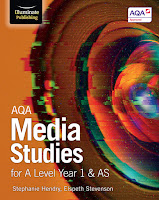
AQA MEDIA STUDIES FOR A LEVEL YR 1 & AS: STUDENT BOOK
  • NEW SPEC: AQA Media Studies for A Level Yr 1 & AS: Student Book 
  • AUTHOR(S): Stephanie Hendry, Elspeth Stevenson 
  • AWARDING BODY: AQA 
  • LEVEL: A Level Year 1 & AS 
  • ISBN: 978-1-911208-03-7 
  • SUBJECT: Media Studies 
  • PAGES: 272pp 


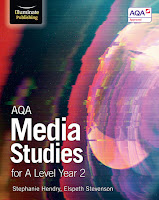
AQA MEDIA STUDIES FOR A LEVEL YEAR 2: STUDENT BOOK
  • AQA Media Studies for A Level Year 2: Student Book 
  • AUTHOR(S): Stephanie Hendry, Elspeth Stevenson 
  • AWARDING BODY: AQA 
  • LEVEL: A Level Year 2 
  • ISBN: 978-1-911208-09-9 
  • SUBJECT: Media Studies 


AQA MEDIA STUDIES FOR A LEVEL YEAR 1 & AS REVISION GUIDE
  • AQA Media Studies for A Level Year 1 & AS: Revision Guide
  • AUTHOR(S): Stephanie Hendry
  • AWARDING BODY: AQA 
  • LEVEL: A Level Year 1 & AS
  • ISBN: 978-1-911208-86-0 
  • SUBJECT: Media Studies 


Creative Mentor Network

The Creative Mentor Network is an incredible opportunity for post-16 students to make connections in the creative and media industries by shadowing a professional for several weeks. We’ve had a number of students complete the project and develop a fantastic range of contacts and experiences that will help them to get a job in the creative industries in future.

You can find more details on the CMN website or watch the video below (featuring our very own Hussein!)


We'll be talking about CMN in more detail in the next couple of weeks and in Post-16 assemblies so look out for more here!


MIGRAIN: Narrative

Narrative is a vital concept for A Level Media Studies and underpins the success or failure of most media texts.

We look for narratives - stories - to make sense of media products. Everything from film and television to news and adverts relies on narrative to help audiences understand the message. 

There are narrative patterns and three key narrative theories we need to learn as part of our introduction to A Level Media. The notes as a reminder:

Narrative patterns

Linear Pattern: progresses forward towards a resolution - Beginning, Middle and End.
Multi-strand Narrative: popular in broadcast TV (e.g. soaps) and film. Involves more than one narrative running parallel involving different characters and locations.
Documentary narrative: this may revolve round a central theme (e.g. troublesome neighbours) or group of people.

Long-running TV series such as Game of Thrones or Breaking Bad have one major overarching narrative and lots of mini-narratives. The overarching narrative runs over the series, the mini narrative may be resolved within an episode.

Narrative theories

When studying narrative in Media, we need to be able to identify what the story is and how it is being told. There are three key theories we need to learn and apply:

Enigma and Action Codes - Roland Barthes
Barthes suggested that stories have certain codes that audiences understand and respond to.

ENIGMA codes: control how much we know and help hold our interest. It creates mystery during the narrative.

ACTION codes: events or actions in the story that are important in developing the narrative, e.g. a gun being cocked signifies that a violent scene will follow.


Todorov: equilibrium
Tzvetan Todorov proposed a theory of equilibrium:

Equilibrium: An existing state of harmony
Disequilibrium: Equilibrium is disrupted by an unfortunate event or evil character which leads to a chain of events involving conflict
New Equilibrium: The evil forces are defeated, the conflict is resolved and harmony exists once more


Character theory: Propp
Vladimir Propp came up with a list of stock characters in narratives by examining Russian fairytales. He called them the seven spheres of action:

The Villain: Creates a complication in the narrative
The Donor: Gives the hero something that will help in the resolution
The Helper: Helps the hero in restoring the resolution
The Princess: Has to be saved by the hero
The Dispatcher: Sends the hero on a task
The Hero: Central protagonist, saves the day and restores equilibrium
The False Hero: Rare character that appears to be good but is revealed to have been bad all along.


Narrative: blog task

Complete the following questions using the Media Factsheet resource available on the Media Shared drive. 

You'll find them in our Media Factsheet archive: M:\Resources\A Level\Media Factsheets

Read Media Factsheet 14 - Telling Stories: The Media's Use of Narrative and answer the following questions:

1) Give an example from film or television that uses Todorov's narrative structure of equilibrium, disequilibrium and new equilibrium. 

2) Complete the activity on page 1 of the Factsheet: find a clip on YouTube of the opening of a new TV drama series (season 1, episode 1). Embed the clip in your blog and write an analysis of the narrative markers that help establish setting, character and plot.

3) Provide three different examples from film or television of characters that fit Propp's hero character role.

4) Give an example of a binary opposition.

5) What example is provided in the Factsheet for the way narratives can emphasise dominant ideologies and values?

6) Why do enigma and action codes (Barthes) offer gratifications for audiences?

7) Write a one-sentence summary of the four different types of TV narrative:
  • Episodic narrative (the series)
  • Overarching narrative (the serial)
  • Mixed narrative
  • Multi-strand overlapping narrative (soap narrative)
8) How does the Factsheet suggest adverts use narrative?  


You will be given lesson time to work on this but will need to complete for homework - due date specified by your exam class teacher.

Monday, September 30, 2019

MIGRAIN: Genre

Genre is a crucial key concept and underpins our understanding of all media texts. 

If you missed the lesson on genre the key notes are here:

Genre: notes

Genres may be identified by the following:

Narrative structures
Plot
Typical situations, characters and relationships

Visual iconography
Mise-en-scene: props, costumes, locations etc.
Cinematography

Ideology and themes
Representations, values and ideologies

Daniel Chandler suggests definitions of genre tend to be based on the notion that they constitute particular conventions of content (such as themes or settings - iconography) and/or form (including structure and style) which are shared by the texts which are regarded as belonging to them.


Genre: institution and audience

Tolson (1996) suggests that genre “mediates between industry and audience”.

Abercrombie suggests that “television producers set out to exploit genre conventions... It... makes sound economic sense.” 


Abercromie adds: “Genres permit the creation and maintenance of a loyal audience which becomes used to seeing programmes within a genre.”


Genres of order and integration

Some theorists (including Schatz) have suggested there are only two genres:

Genres of order: western, gangster, action, sci-fi etc. Identified by hero (dominant; male), setting (contested, unstable), conflict (external; fighting), resolution (death). 

Genres of integration: comedies, musicals, rom-coms etc. 
Identified by heroes (couple or collective); setting (civilised space); conflict (internal; emotional); resolution (love).


Neale: “Repetition and difference”

Steve Neale declares that “genres are instances of repetition and difference” (Neale 1980). He adds:  “Difference is absolutely essential to the economy of genre” - mere repetition would not attract an audience.


Buckingham (1993) agrees, suggesting contemporary theory sees genre as dynamic: “Genre is not... simply "given" by the culture: rather, it is in a constant process of negotiation and change”.

Schatz develops this idea that genres are dynamic and suggests they go through a cycle:

Innovation: genre codes are established
Classical: conventions are repeated
Parody: codes become clichéd and are mocked
Deconstruction: the genre is experimented with to establish new or different conventions


Genre: blog tasks

Complete the following tasks using the Media Factsheets available on the Media Shared drive. You'll find them in our Media Factsheet archive: M:\Resources\A Level\Media Factsheets. Please note that you won't be able to access these factsheets from home so make sure you save the relevant PDFs to a USB, your Google Drive or email them to yourself.

Create a new blogpost in your Exam blog called 'Genre blog tasks' and complete the following:

Read Media Factsheet 03 - Genre: Categorising texts and answer the following questions:

1) What example is provided of why visual iconographies are so important?

2) What examples are provided of the importance of narrative in identifying genre?

3) What is the difference between character representation in action movies and disaster movies?

4) What are the different ways films can be categorised according to Bordwell? 

5) List three ways genre is used by audiences.

6) List three ways genre is used by institutions or producers.

7) What film genre is used as an example of how genres evolve? What films and conventions are mentioned?


Read Media Factsheet 126 - Superheroes: A Genre Case Study and answer the following questions:

1) List five films the factsheet discusses with regards to the Superhero genre.

2) What examples are provided of how the Superhero genre has reflected the changing values, ideologies and world events of the last 70 years?

3) How can Schatz's theory of genre cycles be applied to the Superhero genre?


Finally, carry out your own genre analysis using the model provided by media theorist Daniel Chandler. Choose a film or TV text and answer the following questions:

General
1) Why did you choose the text you are analysing?
2) In what context did you encounter it?
3) What influence do you think this context might have had on your interpretation of the text?
4) To what genre did you initially assign the text?
5) What is your experience of this genre?
6) What subject matter and basic themes is the text concerned with?
7) How typical of the genre is this text in terms of content?
8) What expectations do you have about texts in this genre?
9) Have you found any formal generic labels for this particular text (where)?
10) What generic labels have others given the same text?
11) Which conventions of the genre do you recognize in the text?
12) To what extent does this text stretch the conventions of its genre?
13) Where and why does the text depart from the conventions of the genre?
14) Which conventions seem more like those of a different genre (and which genre(s))?
15) What familiar motifs or images are used?

Mode of address
1) What sort of audience did you feel that the text was aimed at (and how typical was this of the genre)?
2) How does the text address you?
3) What sort of person does it assume you are?
4) What assumptions seem to be made about your class, age, gender and ethnicity?
5) What interests does it assume you have?

Relationship to other texts
1) What intertextual references are there in the text you are analysing (and to what other texts)?
2) Generically, which other texts does the text you are analysing resemble most closely?
3) What key features are shared by these texts?
4) What major differences do you notice between them?


This is a lot of work - but you will have plenty of lesson time to complete it (including lesson time) plus the long weekend due to the school Inset day. Anything you don't finish this week in the lesson complete for homework - due in your second exam lesson next week. In total, we think this work will take around 2-3 hours so plan accordingly.

Sunday, September 29, 2019

Film & TV Language: Lighting

One aspect of mise-en-scène that is particularly important in film and TV is Lighting.

Lighting notes


Traditional studio lighting usually comes from three sources:
  • The key light is the brightest and most influential.
  • The back light helps to counteract the effects of the key light making the subject appear more ‘rounded’.
  • The filler light helps to soften any shadows created by the other lights.  There may be more then one filler light.
The key light can be directed from a variety of angles to create different effects.

Underlighting comes from below the subject leading to a distorted effect.  This is often used in horror or science-fiction films.

Top lighting comes from above and can be used to accentuate the features of a character.  It is often used to make film stars look more glamorous.

Back lighting is when the source comes from behind the object to create a silhouette.    


High-Key and Low-Key Lighting

Low-key lighting is created by using only the key and back lights.  This effect produces strong contrasts of light and dark and creates dramatic shadows.  The effect is known as chiaroscuro, which comes from the Italian words for light (chiaro) and dark (oscuro).


High-key lighting means that more filler lights are used.  The effect appears more realistic and might depict either a sunny day or a more dimly lit scene.  The major difference is that, although shadows are still created, the contrast between light and dark is much less pronounced.  


Lighting blog tasks

You'll need to use the Film Language Powerpoint to work through the Lighting tasks. 

Create a blogpost called 'Lighting blog tasks' and complete the following:

1) Still image analysis

Look at the still images on slides 33-37 of the Film Language Powerpoint linked above. Copy the images into your blog and answer the following questions for each image:
  1. Identify examples of high and low-key lighting.
  2. Say which depict top, back or under lighting.
  3. What effects are created by the lighting in each image?     
2) Film noir research 

Research film noir - focusing on the genre’s distinctive lighting style. Make notes on the genre and particularly the use of lighting - bullet points are fine. 

3) Film noir YouTube clip analysis 

Finally, find a YouTube clip that fits the film noir genre and embed it under your research (the clip can be classic noir from the 1950s or something more recent - neo-noir). How does the clip's lighting fit the film noir genre?

Anything you don't complete in the lesson will be homework, due next week.

Media blogs: setting the standard

Your Media blog is where you will do the vast majority of your work as a Media student - so we need to make sure it looks professional. 

It makes sense to think of your blog like an exercise book - your work here will be marked and you'll also use it for crucial revision before assessments and exams.

These are the guidelines you need to follow when working on your Media blog:

1) Always write a post title that clearly states the piece of work you are producing. The correct post title will almost always be specified on the original blog task. Your post title goes here: 


2) Make sure your written English is perfect - just as you would in an exercise book. This means capital letters, full sentences and accurate spelling and grammar.

3) If you are answering questions on your blog, make sure you clearly number each question. Leave a line break between each question too.

4) When completing larger case study tasks, make sure you use subheadings as directed in the original task.

5) Save your work regularly and publish it before you log off. You can always go back and edit or finish your work but it's vital you don't close your browser before saving and publishing because that's how you can lose work.

6) If you're looking for the higher grades in Media, it's vital you answer questions in well-developed paragraphs and not single sentences. The depth and detail of you analysis will ultimately be what gets you to the top grades - so get into good habits on your blog from day one.

Finally, if you've changed any of your display settings in your blog then make sure it is easy to read and aesthetically pleasing to your reader. In other words, you're a Media student so make sure it looks like it's been designed by someone who knows what they're doing!

Set a high blogging standard from day one and you will be on the way to a top grade in Media!

Wednesday, September 25, 2019

Film & TV Language: Mise-en-scene video feedback and learner response

Your star persona mise-en-scene makeovers were a brilliant introduction to the challenges and creativity demanded by A Level Media.

Video projects take time - as well as comprehensive planning, organisation and execution. The more projects you complete the better prepared you will be for the practical coursework when we come to it in the summer. As a first assignment, it's fantastic to see how many of you have created superbly innovative and technically proficient videos that meet the brief you were given.

Mise-en-scene makeover: Learner response

Create a new blogpost called 'Star persona video feedback and learner response'. Make sure your completed star persona video is embedded in the blogpost.

1) Type up your feedback from your teacher in full.

2) Type up the comments you received from other students in the class. You may wish to do this in bullet point and you do not need to repeat comments if more than one student wrote the same thing about your work.

3) Use the feedback you've been given to write your own self-assessment of your video using WWW (What Went Well) and EBI (Even Better If...)

4) Now reflect on your own work in more detail. How did your star persona mood board planning help clarify and develop your ideas?

5) Thinking technically, how could you improve your work for future videos? (E.g. filming, editing, sound etc.)

6) Finally, what have you learned regarding the importance of mise-en-scene to character, narrative and the creation of star personas in film and television?

You may have some lesson time to do this but will need to finish for homework - due date confirmed by your coursework teacher.

MIGRAIN: Reception theory

Reception theory is extremely useful when decoding media texts - and allows us to explore how different audiences may react to a media product.

It's also one of AQA's key theories for the new specification which means there may well be an exam question asking you to apply the theory to a particular media text. Make sure you have confidently learned these notes then complete the blog tasks below.

Reception theory: notes

Studying media language means looking at the way in which the sign or text is interpreted and how the meaning comes across to the audience. 

All media is thought to be polysemic in that it can be interpreted in different ways – it is not simply passively accepted by the audience. Stuart Hall introduced the idea of three different readings.

Stuart Hall: reception theory

Hall suggested there are three types of reading:

Dominant, Preferred or Hegemonic Reading: what the producer/creator intends – the ‘natural’ reading

Negotiated Reading: a middle ground between the producer’s intentions and the audience’s individual views

Oppositional or ‘Counter-Hegemonic’ Reading: an alternative reading that is actively against the producer’s intentions.

Reception theory: example exam question

Sample AQA question for new specification:

According to reception theory, ‘the media attempts to transmit specific messages to audiences, but audiences are free to interpret these messages in a variety of ways – or even reject them’.

How valid are reception theory’s claims about audience responses? [25 marks]

Applying reception theory: blog tasks

Create a new blog post called ‘Reception theory’ and write a paragraph for each advert analysing the dominant, negotiated and oppositional readings. 

Look back at the adverts you have been analysing in this week's lessons and homework (RBK 50 Cent and one of your choice). 

1) What are the preferred, negotiated and oppositional readings for the adverts you have studied?

2) Do these adverts provide evidence for the idea that audiences are free to interpret messages in a variety of ways - including rejecting them? Answer this question as a mini-essay, exploring both sides of the argument.

Remember to highlight or bold any media terminology you are using.

Complete for homework if you don't finish this in the lesson - due next week.